
Knitted Activism
Liberty and Justice through Textile Arts

Community and Craft as Protest
I have been seeing a lot of posts on Social Media about the Norwegian Knit Cap.1 I love this, it the kind of project that give us an opportunity help in a way that includes yarn and the community. Like so many cultural icons, this hat has a very long history.
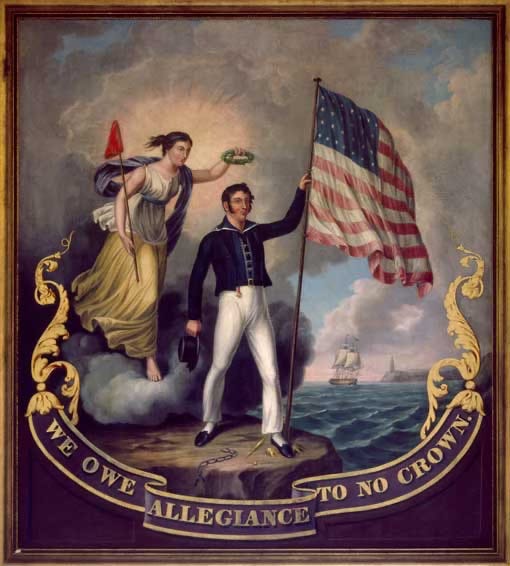
Red Hats in History
A year ago, I posted an essay about Fabric as a Form of Communication, which touches on the history of the Phrygian Cap.2 This sartorial item has been long associated with liberty and a call for freedom. In Ancient Greece and Rome, a red cap was given to people as a sign that they had been released from slavery.
In fact, the politicians who murdered Julius Caesar in 44 BCE paraded their blood stained weapons, along with a red cap on a pole, to demonstrate to the citizens of Rome that they were no longer “slaves.” Apparently, the average Roman citizen liked Caesar’s government and the symbols were not appreciated at the time.
Liberty Caps Everywhere
The Liberty Cap, has become so entangled in the history of the United States that over one hundred can be found in murals and paintings in the United States Capitol Building. 3
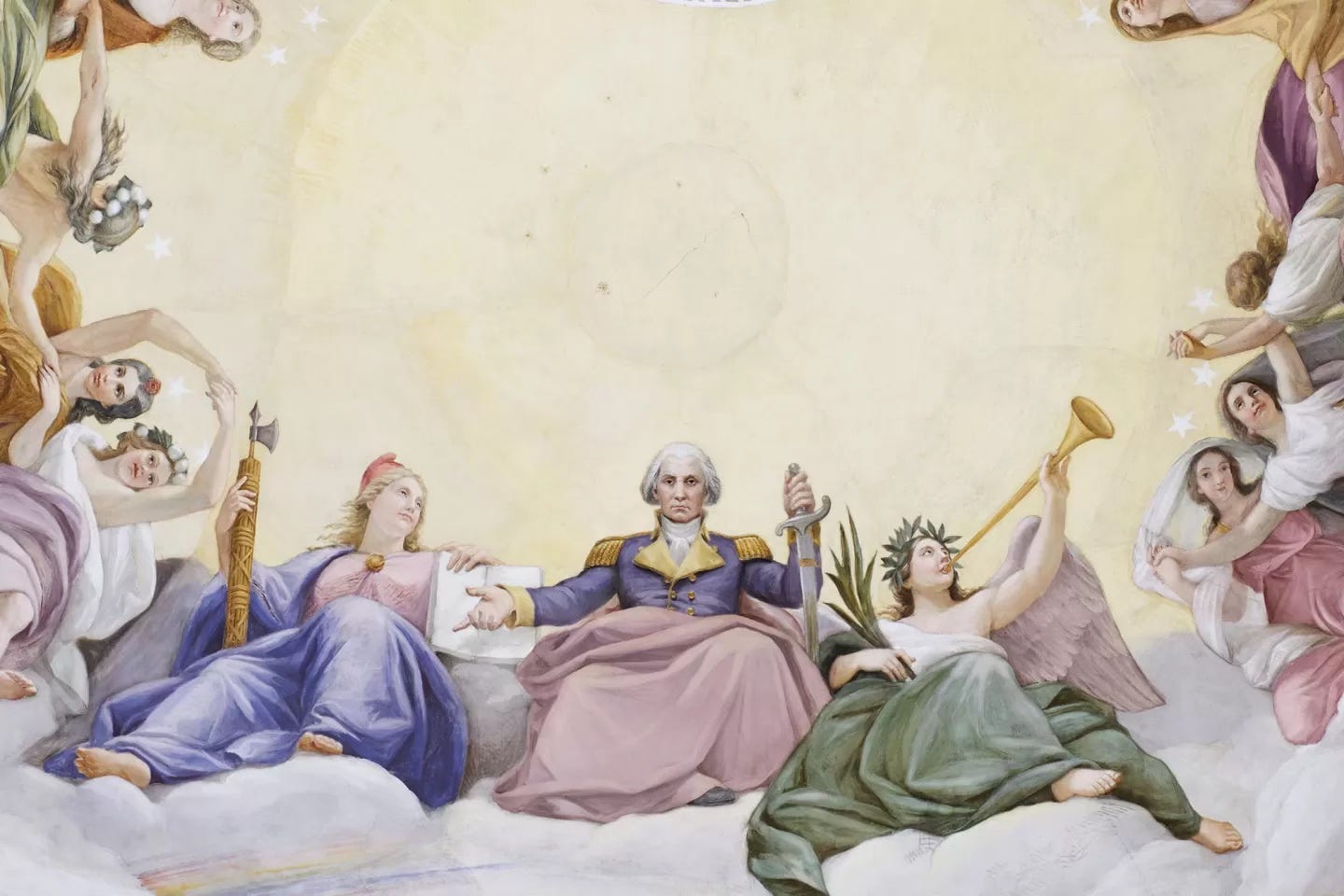
During the American Revolution (250 years ago)4 the Liberty Cap became a sign of fidelity among the Sons of Liberty. Rather than wearing one (risking arrest or worse) it would have been displayed on a Liberty Pole clandestinely raised in a town square. Here is a description of one way the Liberty Cap would have been displayed:5
“In Boston, as an example, to identify oneself as a member of the Sons of Liberty, Paul Revere cast a coin size medal which was suspended around the neck by a ribbon. It had a liberty tree on one side with the words “Liberty Tree” on the bottom, and on the reverse side and arm holding a liberty cap with the words “Sons of Liberty” inscribed at the bottom. We have a written description of the medal, but not a single one has survived.”
Here is a painting by Samuel Jennings that I find troubling, but worth studying. It is titled Liberty Displaying the Arts and Sciences, or The Genius of America Encouraging the Emancipation of the Blacks, 1792. 6
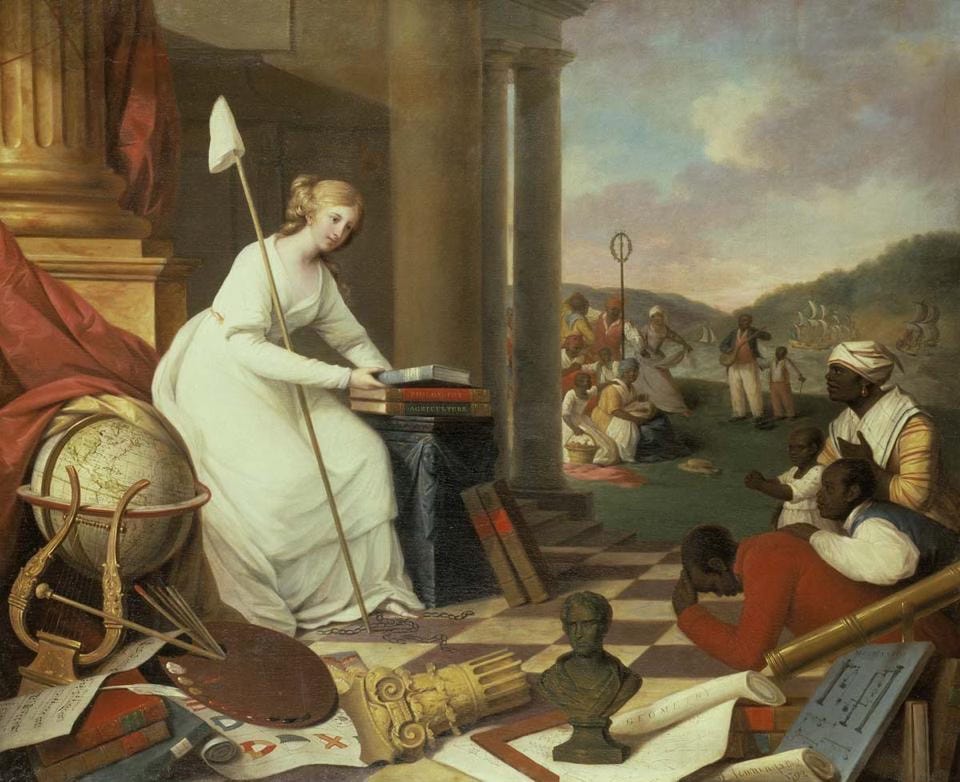
Liberty is portrayed as a sweet school marm, with a Liberty Pole. Her pupils are effusive in their thankfulness for the gifts she offers. The accoutrements of Western Civilization and Education are strewn about the canvas. Her Liberty Cap is white, which is not uncommon, and it does match her dress rather nicely. I find it interesting that the artist placed her Liberty Pole in the crook of her arm, not unlike the way a distaff would have been placed in a Medieval Manuscript. The irony of this well intentioned painting, is that genius and the capacity for learning are found in all humans and does not need to be bestowed. People gifted with tremendous skill and knowledge survived the horrors of slavery, and contributed mightily to the world. Liberty, which we are told is an unalienable right, belongs to everyone.
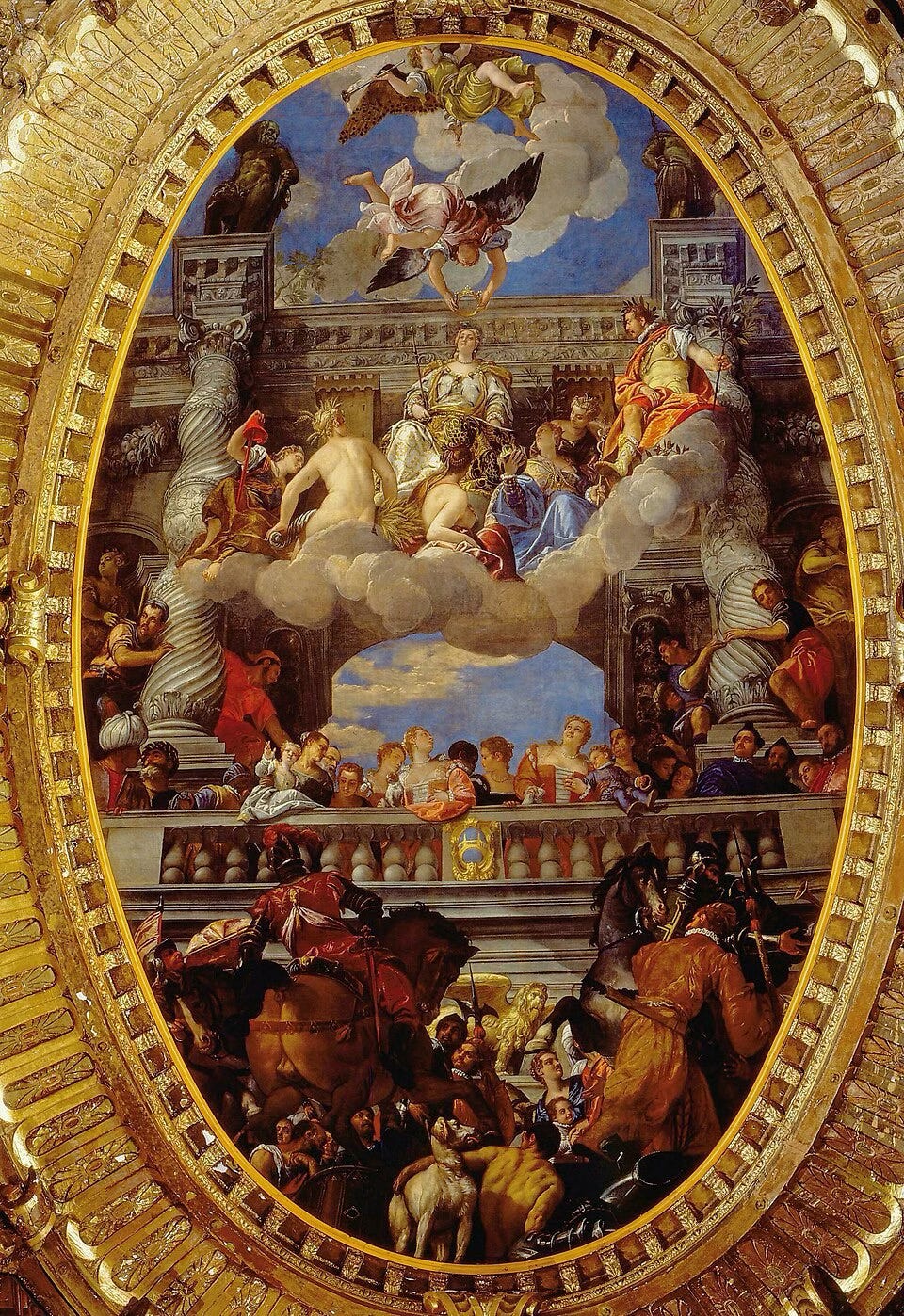
And here a one last grand painting, from the Doges Palace in Venice, 7with Liberty waving her favorite hat.
Norwegian Knit Cap ( AKA Melt the ICE Hat) proceeds from pattern sales will go to support the community in Minneapolis MN. The designers describe it like this:
“In the 1940’s, Norwegians made and wore red pointed hats with a tassel as a form of visual protest against Nazi occupation of their country. Within two years, the Nazis made these protest hats illegal and punishable by law to wear, make, or distribute. As purveyors of traditional craft, we felt it appropriate to revisit this design.”
The pattern is available on Ravelry, which requires an account to open the App. You can also find the pattern here.
The Website for the United States Capitol has some great images and information.
I was a High School Senior in 1976, during the Bicentennial. How the heck is that 50 years ago?
Excerpt from a Sons of the American Revolution Newsletter
This can be seen at the Library Company of Philadelphia. I recommend the notes that accompany the image.