
Wool Wheels are for Walking
The Two Strands of Spinning Wheel Development

Please come see me
Dogwood Canyon Audubon Center
Mother’s Day Weekend Art Show and Sale
Friday May 8th 5 - 7pm
Saturday May 9th 9am - 4pm
Previously…
In a recent post, I shared biographies for my collection of spinning wheels. They range in age and function, and each one does the work of spinning and plying in a unique way.
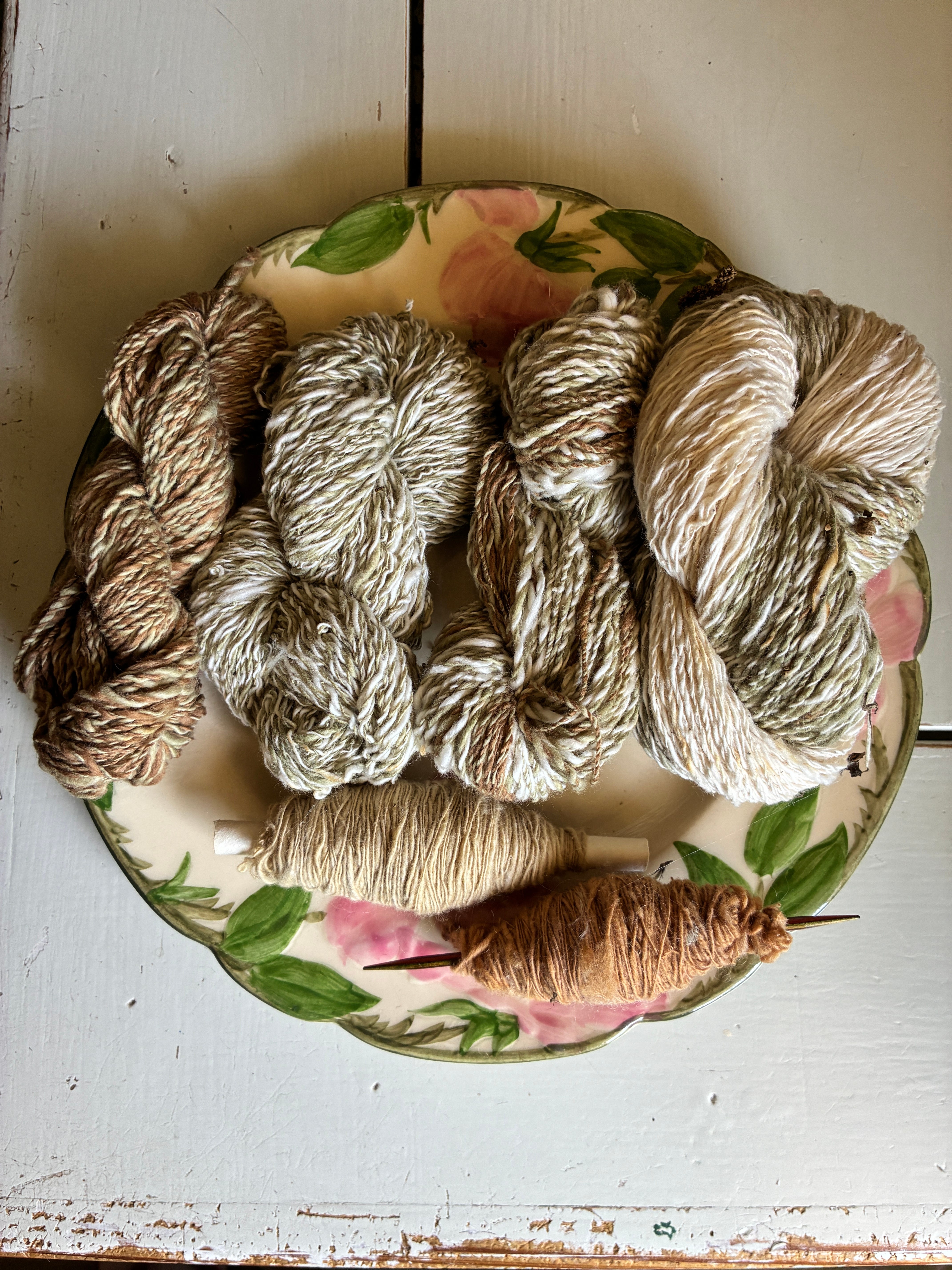
When I take one of the wheels out in public, folks have lots of questions. In fact, they tend to be less interested in the yarn-making than the machinery of the wheel. When the Dallas Hand Weavers and Spinners Guild does educational programming anywhere in North Texas, we get great questions because we always bring a wide range of tools; from spindles to e-spinners.
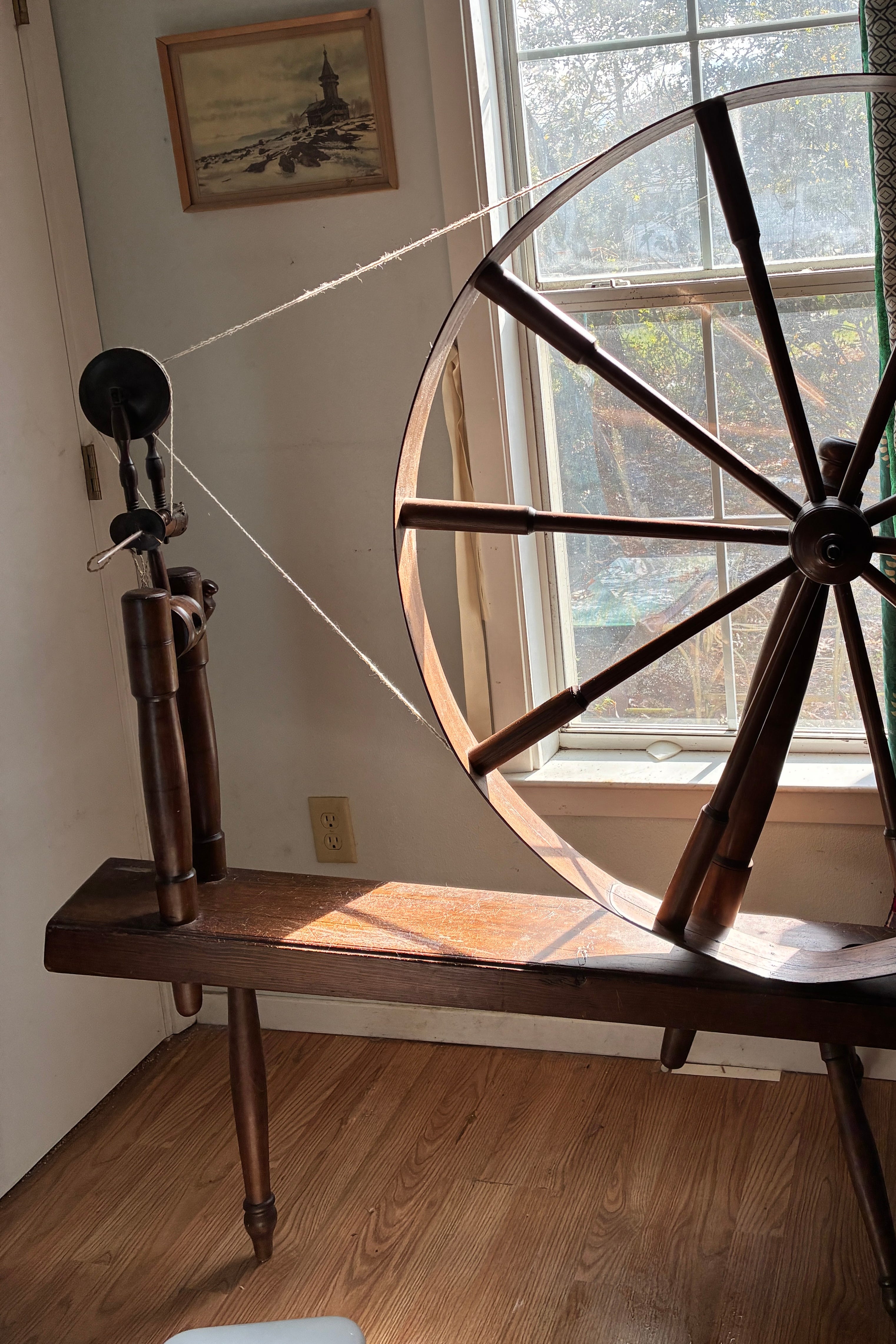
Gertie, the Great Wheel
I have not taken my old girl, Gertie, out in public in a long time. she is getting up there in years and does not appreciate changes in temperature and humidity. When I used to take her out, people would stop in their tracks to watch her work.
She has elegant lines, operates smoothly and clearly not a modern wheel. As far as I can tell, she was made in a Northern State to be sold in the South for cotton spinning some time in the mid-1800s. she can be disassembled and packed into the back of a minivan, as long as there is room for the 52” diameter wheel.
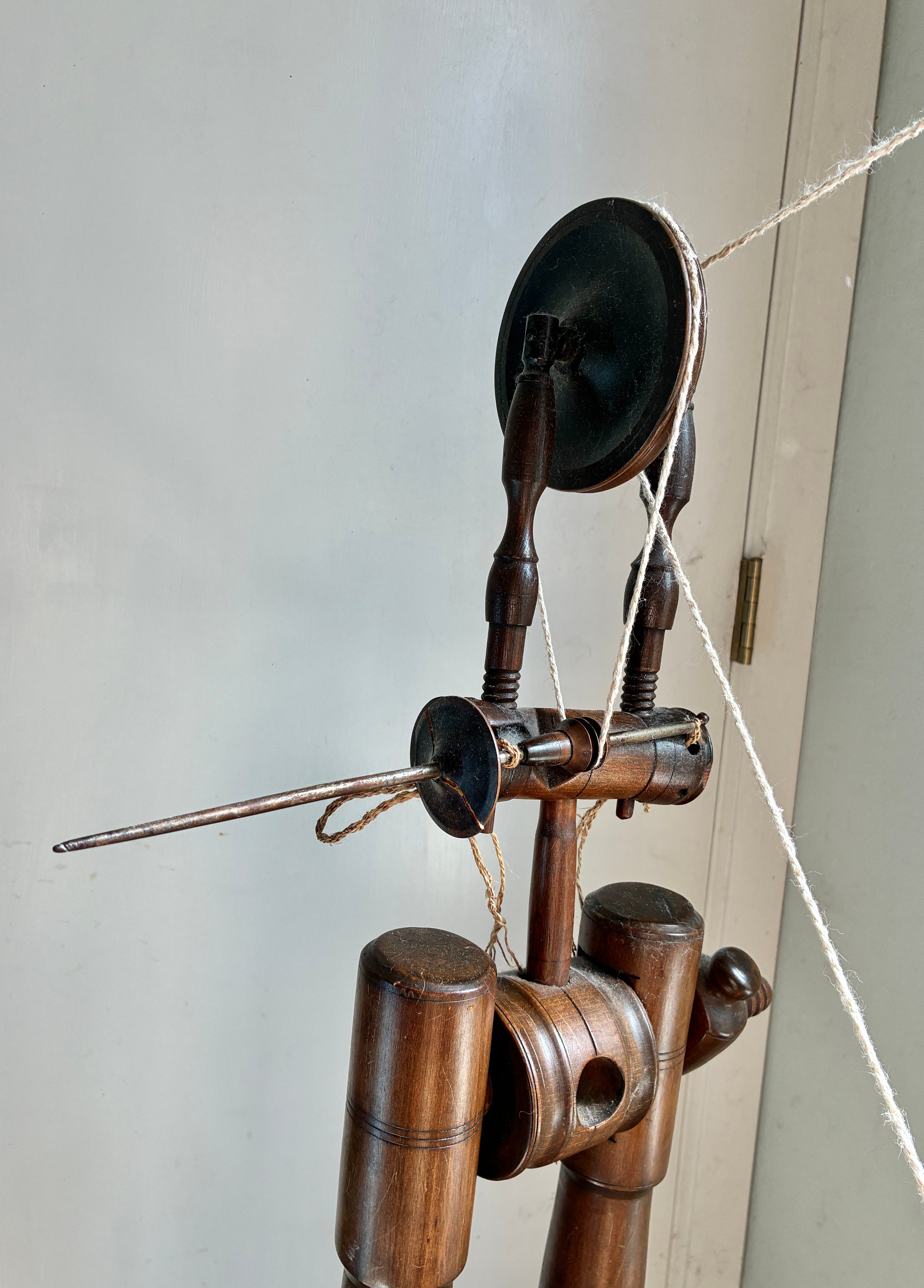
Spindle wheels appeal to our imagination in a way that treadle wheels cannot. They do not look like machines and evoke romantic ideas associated with fairy tales, ship’s wheels, unicycles, and carriage rides.
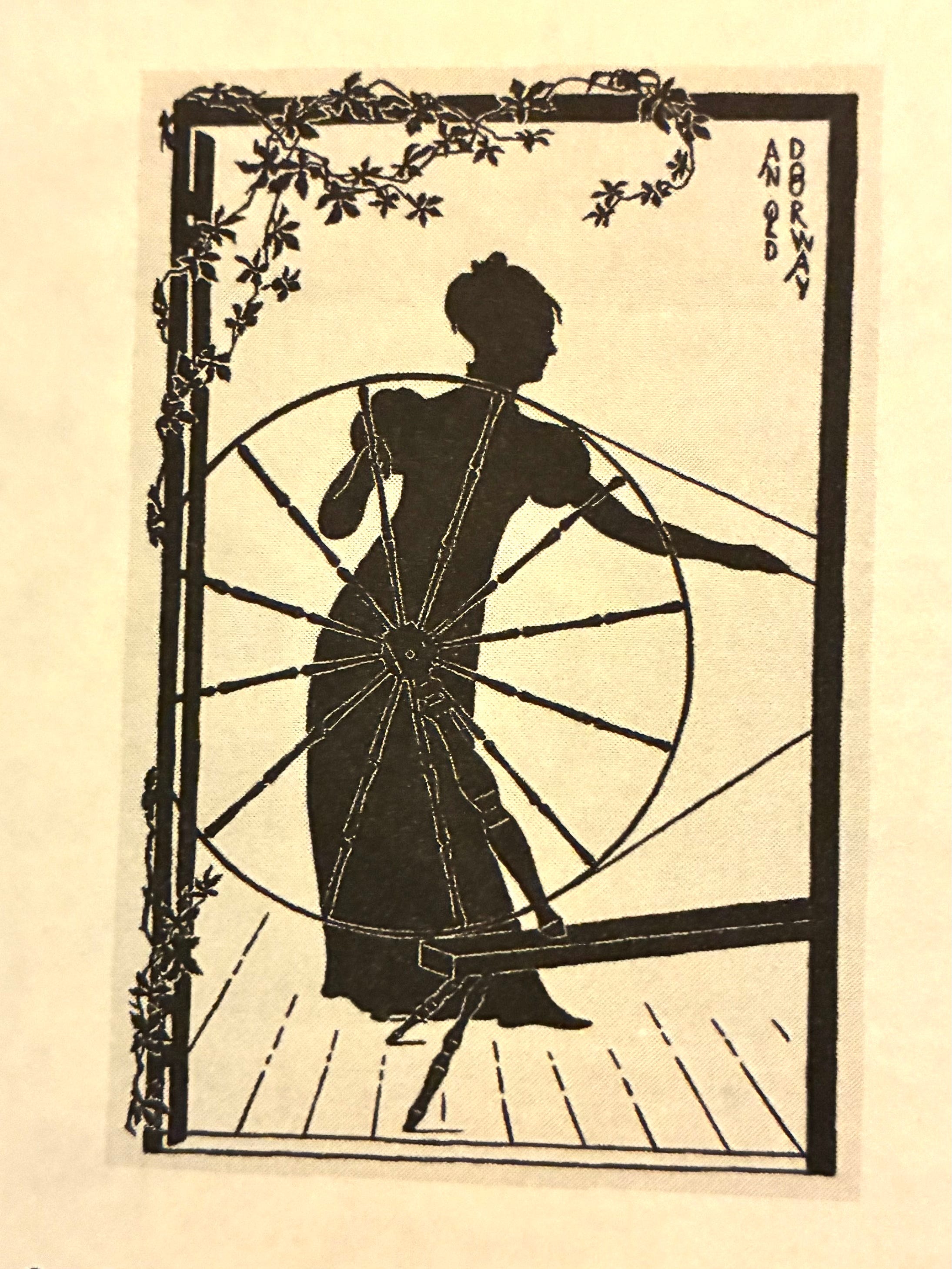
I believe the large wheel was designed by an experienced spindle-spinner who knew exactly what she wanted in a tool. The forward and backward action is easier on the spinner than a hand cranked wheel, she can use her whole body with less stress on her wrists and fingers. The momentum of the wheel carries the work.
This illustration was made for a book by Elizabeth Barney Buel, published in 1903, called The Tale of the Spinning Wheel.
The wheel part of a Treadle Spinning Wheel are usually made from lumber that has been cut and joined into a circle with grooves cut in the wheel to hold the drive bands. In contrast, the Walking Wheel rims are made of thin slabs of joined wood, steamed into a curve that sits on the spokes. The rim of a Walking Wheel is smooth, and a spinner relies on tension (and a little beeswax) to drive the spindle.
I was once told that the reason Walking Wheels are so large, compared to treadle wheels, is because wood-worker only had a jig for wagon wheels, which would make sense if jigs were not relatively simple to create.
Wheel within a Wheel
The earliest Walking Wheels were direct drive, just like the hand cranked table wheels that preceded them. In the early 1800s Amos Minor invented an accelerator for the Great Wheel. Even thought cotton mills were springing up all over New England and the United Kingdom, most spinning of wool was still being done at home (by women and between other chores) on a Walking Wheel. TheMinor’s Head, increased the speed of the spindle and thereby increased production of woolen and worsted yarns.1
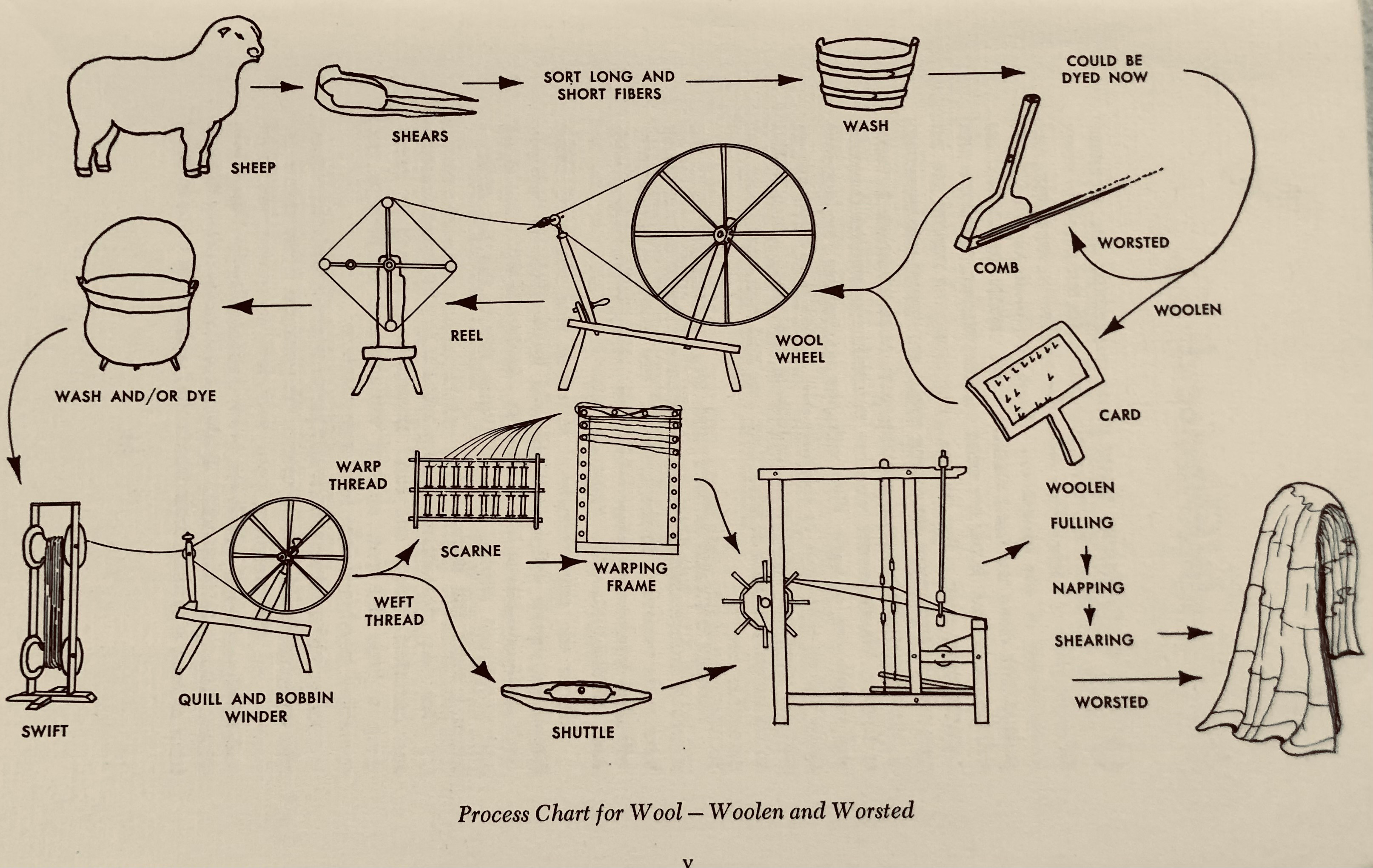
This diagram from a 19th century text book of American History and Culture shows the all the steps of home production. This state of affairs created a ready supply of mill spun cotton to use as warp and supplemental weft led to a whole field of craft that resulted in Over Shot Coverlets and Linsey-woolsey2 fabric. Most of these were a combination of cotton warp with a mix of cotton and wool in the wefts.
Great Wheels are very versatile tools, I use mine to wind quills and bobbins for weaving, in addition to spinning cotton. They do take up a lot of room, but the sculptural beauty makes the lost floor space worthwhile. They have a lot in common with cats; ornamental while being occasionally functional.
Summer to Autumn Project
I have an opportunity to purchase a whole fleece, and I am thinking about turning it into a group project. I would like to go through the steps of making something wearable, from scratch, in a small intentional community. I am thinking we would need to meet once a month for four months to tackle: wool prep, spinning, dyeing and then weaving.
Let me know if this sounds like something you would be interested in doing!
For a fun “discussion” on the history of the Woolen Wheel, this rebuttal to blog post is an interesting read.
Here is a very brief description: Linsey- woolsey There is a lot of history in this rugged cloth, mostly made and used by ordinary working folk. It can also be linked to the establishment of Homespun as an emblem of the American Revolution.