
Overshot Weaving
Simple in Concept, Complicated in Execution

Weaving Structures
Sometimes, weaving made on very simple looms can be very complicated. Individual threads, or sets of them, can be manipulated to create patterns and figures on the warp. There as many ways to change the order of the threads in a piece of fabric as there are weaving traditions.
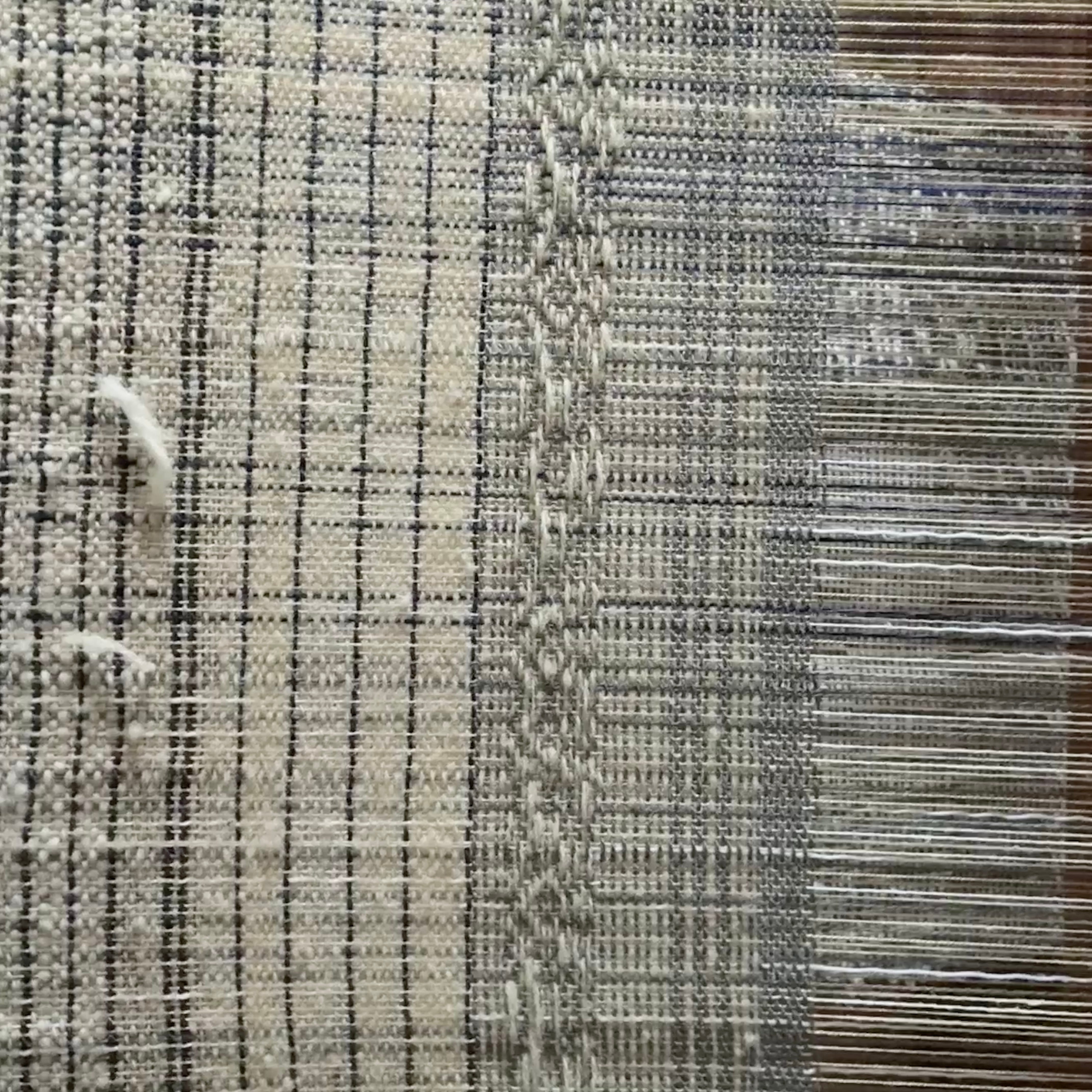
Anni Albers1 made this observation about plain weave (over one, under one):
It is interesting to note, that this most practical of all thread constructions is at the same time also the one most conductive to aesthetic elaborations. The fact that warp and weft appear on the surface in equal amounts and intersect visibly leads the eye to the contrasting materials and colors for them, thereby underlining the original structure of the weave.
On Weaving p. 42
She goes on to write about the variations and qualities of twills, satin as well as over-shot patterns. Changing the pattern changes the nature of the fabric.
As humans sought textile efficiency, looms became more complicated and weaving patterns lost some of their whimsy. I compare it writing with a pen on paper in contrast to using word-processing computers to write. The hand-writer is constrained by the limits of the tools and heir own imagination.
Communicating the Structure
All patterns of weaving can be described with a draft; a diagram drawn on to a graph (usually on paper) to indicate not only the order of the threads, but also the colors used in each end or pick.2
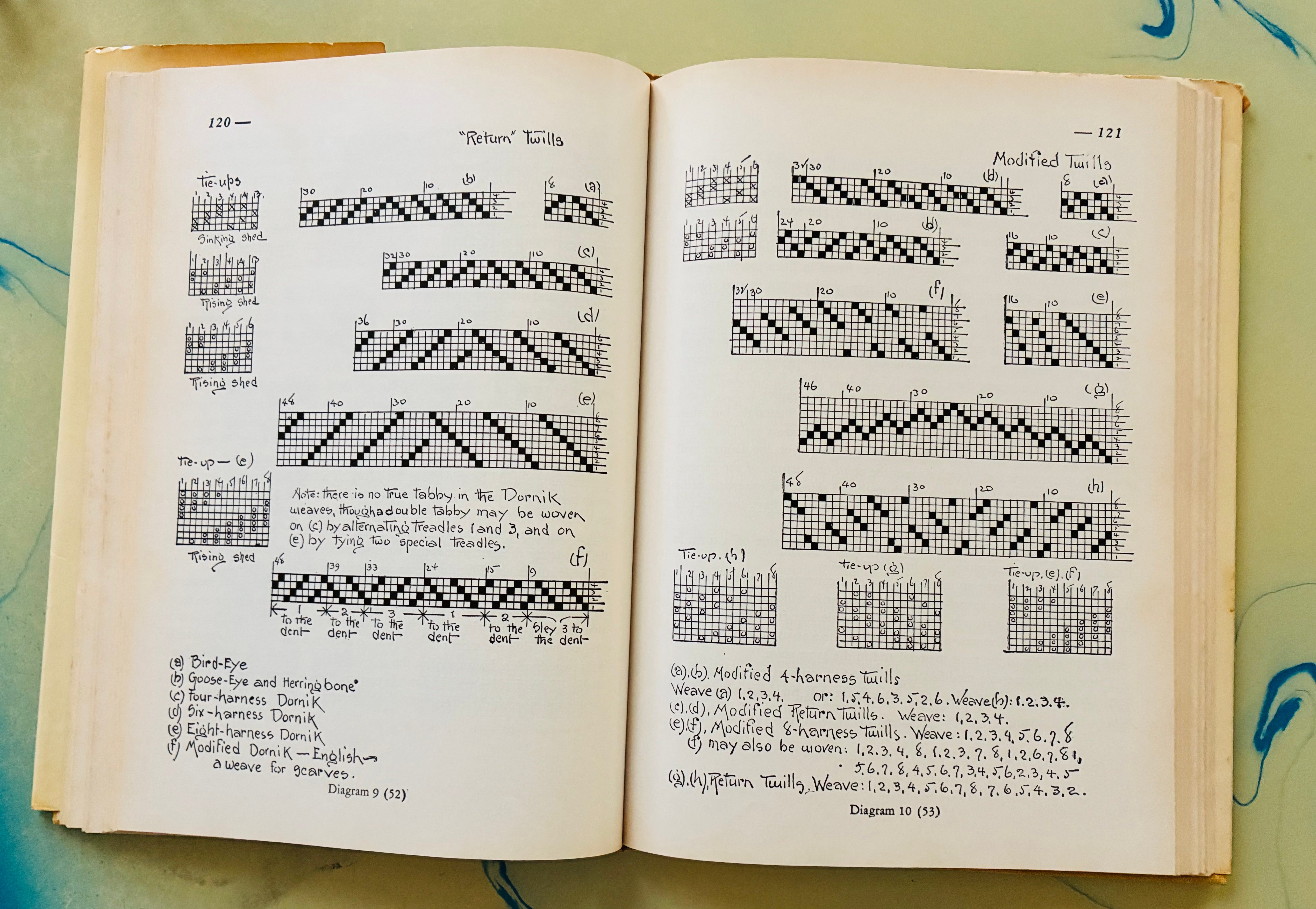
Drafts, especially old time drafts for coverlets, can look like sheet music or scientific graphs. The vertical graph indicate how to set up the warp on the loom. and the horizontal graph is instructions for the trailing as one weaves. If there is not weaving graft, the instructions will say, Tromp as writ, which is delightfully archaic. These pages are from Else Regensteiner’s classic book The Art of Weaving. Weaving drafts are a way for a weaver to remember how a pattern was formed, and share it with others.
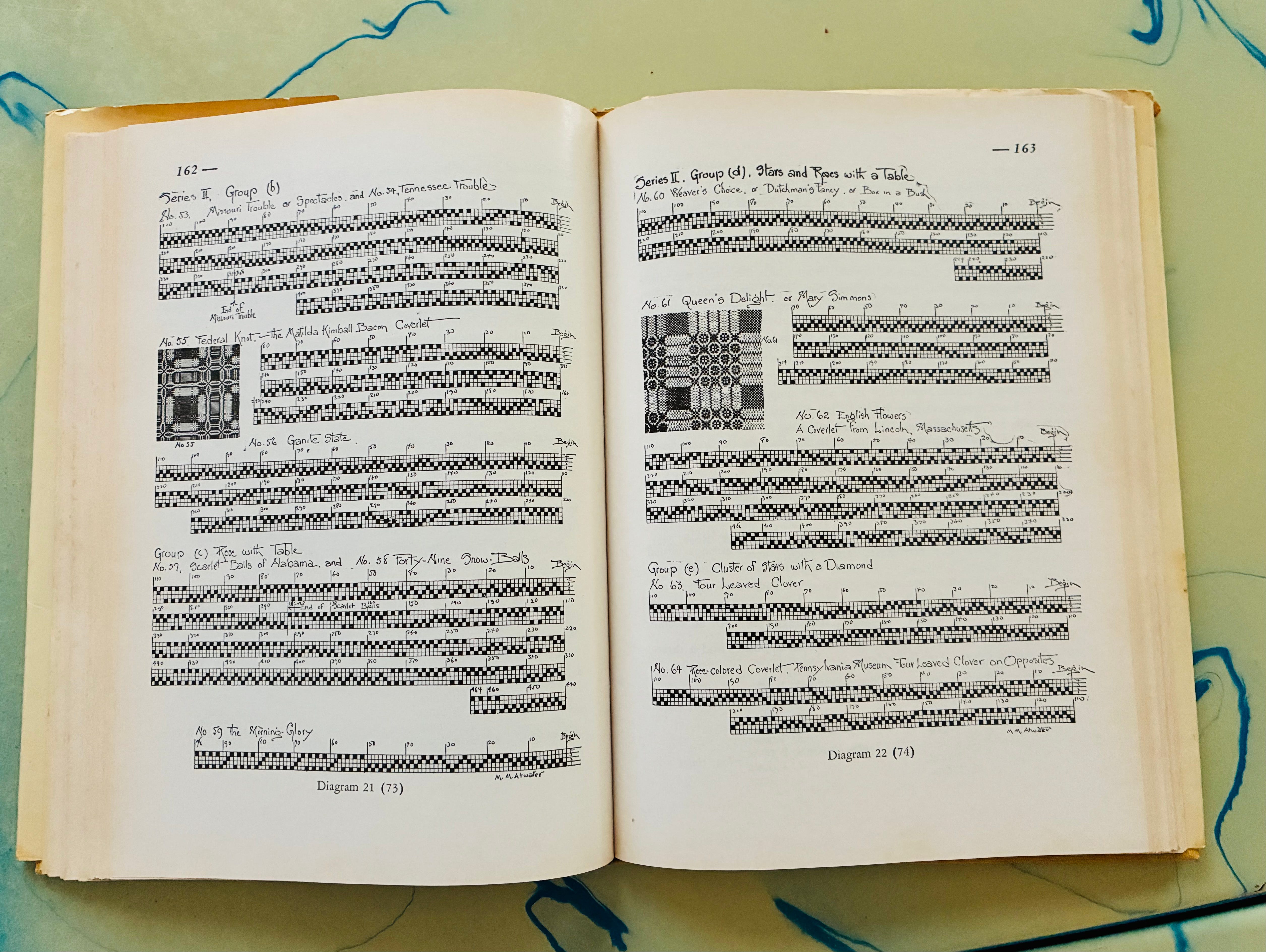
It is also possible to lay out the whole design with graph paper. in both formats, a weaver would use a black square for the threads that show and a white square for the hidden thread. Fundamentally, 1 and 0, or as we call it today: coding. Truly complicated wonders can be compiled with this system.
How it Started
I was introduced to overshot weaving at the same time that I saw my first floor loom. This took place in weaving classes in college in Kentucky. I had deliberately enrolled there because I wanted to learn how to weave and spin.3
I did not learn to spin until after college, but I spent endless hours in the weaving studio. Our teacher was committed to transmitting as much weaving knowledge into our heads and hands as she could in the short time we met for classes. Because there were many weaving organizations around the region, we had ready access to yarn in all colors. Most were poly-blends, we had to sift through the boxes to find cotton or wool yarn, but we were happy to have access to so much abundance.
Coverlets and other overshot wonders were everywhere, it was 1976 and old timey crafts were having a resurgence. Also, I was in Kentucky. Every home and museum I visited had quilts, overshot coverlets, and other textile in stacks. The history of over-shot coverlets and the relationship to Colonialism and Westward expansion are well covered in Laura Thatcher Ulrich’s The Age of Homespun. A book worth reading during the 250th celebrations.
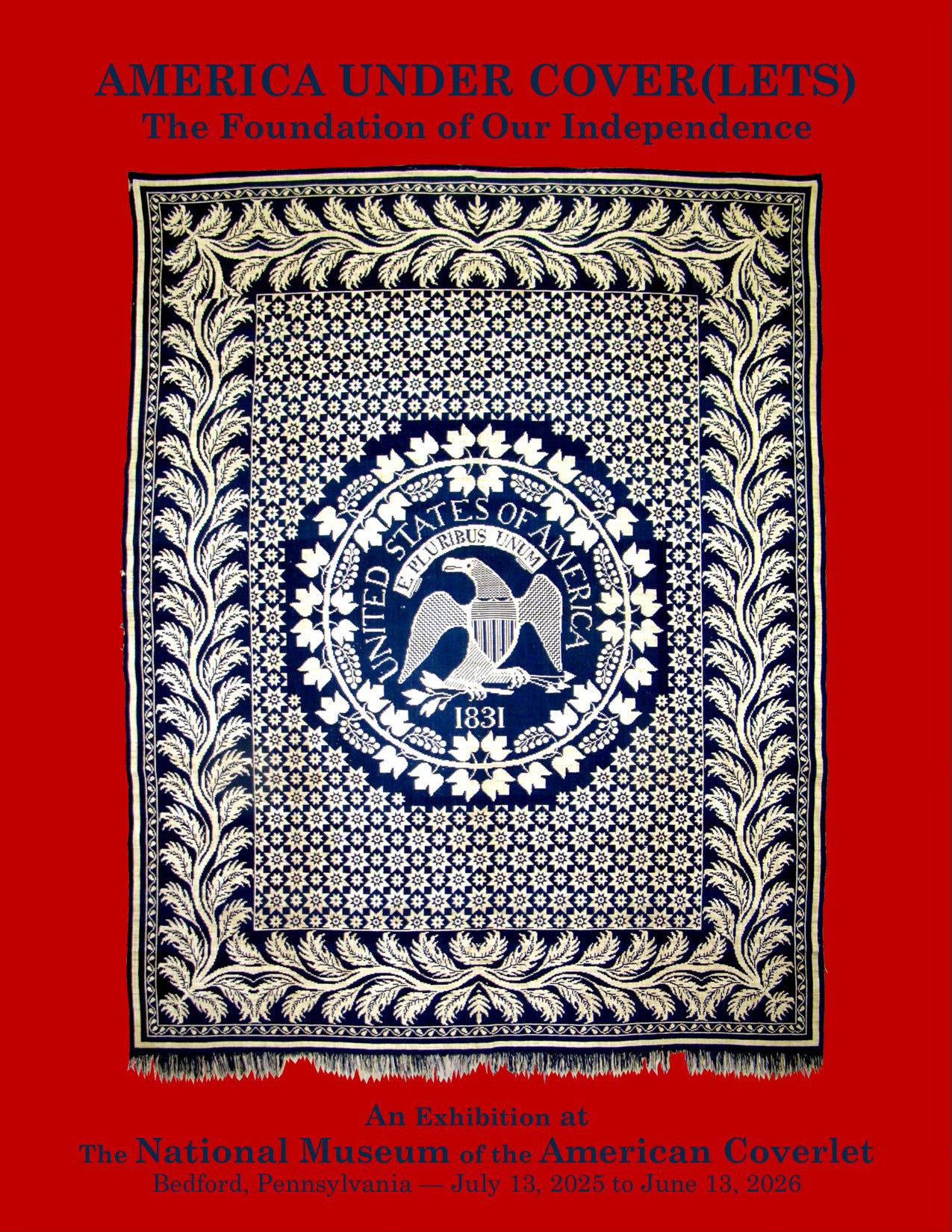
The National Museum of the American Coverlet has an extensive collection of woven works that came from family collections.
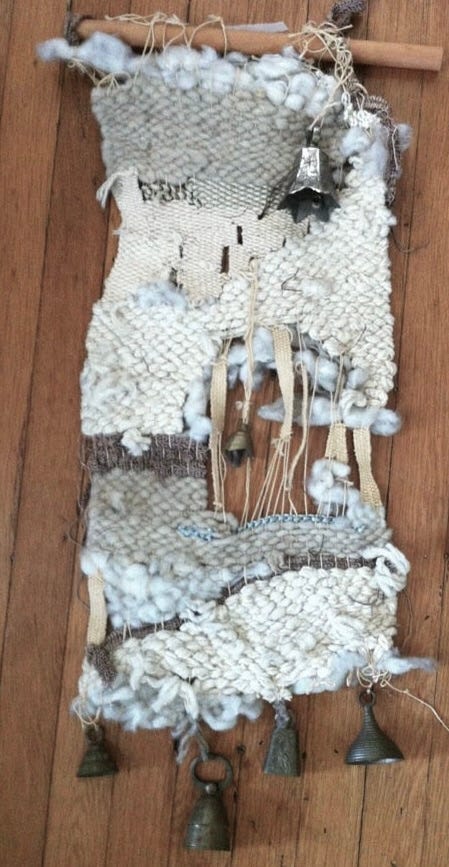
Experimenting with Non- Functional Textile Arts: Wall Hangings
Some folks in the weaving classes, including myself, made frame looms where-on we tried our hands at experimental weaving and artful tapestries. We were, after all, Art Majors.
Current Project
I recently set up my loom to weave my first attempt at overshot since college. It is relatively modern pattern (only 100 years old) called Honeysuckle. Because of the contrast in yarn weight: thin warp and tabby with a fairly hairy wool handspun for the pattern, the results are mixed. About half way through, I switched to plain weave; mainly so I could just play with the textures. The last bit was pretty successful, and all the pieces washed up beautifully. The big question now, as always, is what to make from all this yardage.


Albers, Anni On Weaving, Wesleyan University Press,Middletown, Connecticut 1965
Each individual warp thread is called an end and each bit of weft that passes through the warp ends is call a pick.
I had been accepted to a couple of East Coast Arts Colleges, but my parents were not excited about that possibility. This liberal arts, church-related college satisfied all of our requirements.
I am fascinated with overshot but have not worked up the courage to try it yet!!
I love overshot, it's the weave structure that I tend to return to the most, I can't seem to help myself! ❤️